From the maker
Seeped in superstition and folklore, the black cat is also an iconic symbol of Halloween. Nearly invisible at night, secretive and selectively indifferent to the humans it lives amongst, it slinks through shadows to hunt or to curl up where warmth is to be found. In the days of our ancestors, this might have been near the hearth, where heat radiated from a cooking fire, where food or remedy was made, a space traditionally associated with women. This proximity may have been one of the first links between the cat and the witch in European folklore. Other behaviors, such as their independent nature, nocturnal habits, their nearly silent movements, and their ability to “see” in the dark lent them what people of the time thought to be supernatural traits. The black cat was associated with witchcraft even more so; during the witch trials, confessions detailed black cats as witches familiars, agents of or outright embodiments of the devil. This association, of the black cat as the witches’ familiar, is one that has traversed the ages and crossed the sea into Halloween culture. Halloween decorations of witches riding broomsticks or hovering over their cauldrons are almost always depicted with black cat companions, though the folkloric history is lost to time.
Though the folklore may have mostly disappeared, the superstition that grew up around black cats is invariably linked to it. To this day people have an aversion to them that runs so deeply, black cats often struggle to find homes in shelters. Many people still know the superstition that to have a black cat cross your path is bad luck, though the belief does not seem to be as intensely rooted as it once was. Nor may they realize that this stems from the fear that it may really be a witch or devil in the skin of the black cat.
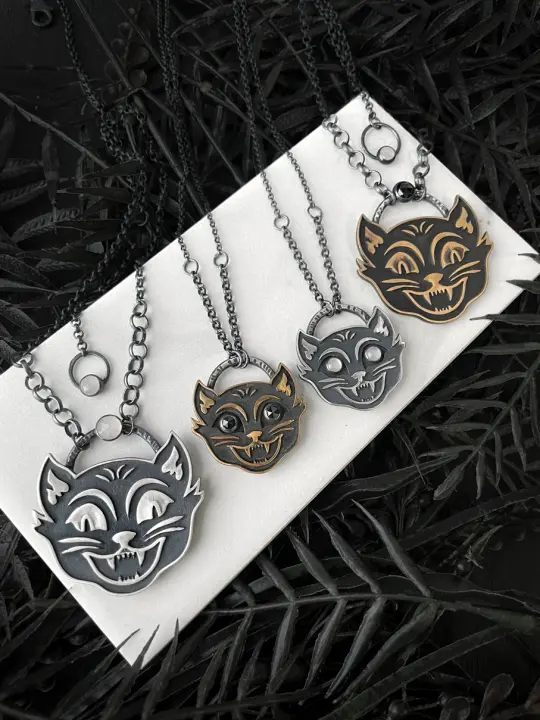
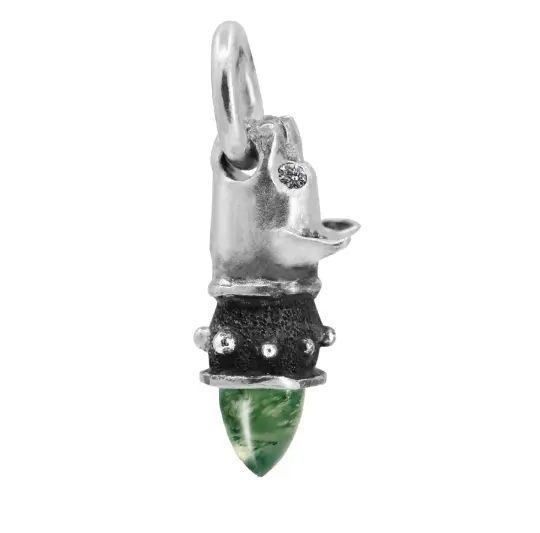
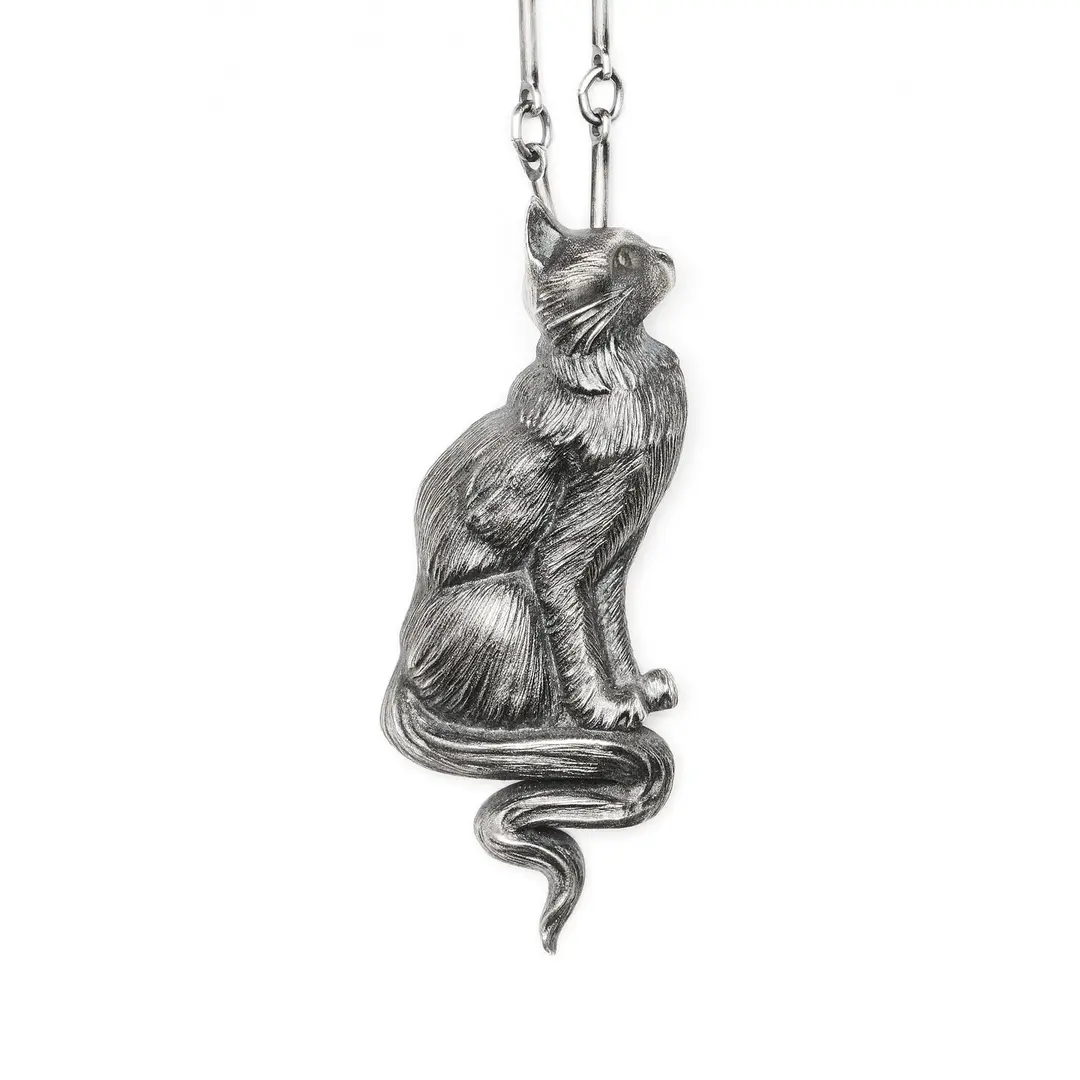
This year’s Halloween offering is a collaboration with my husband, illustrator Aaron Horkey, as a love letter in jewel form to one of the season’s most ubiquitous symbols, the black cat. Our cat, rendered in profile, features an uncannily elongated tail, a nod to its role as the Witch’s familiar. Made in honor to usher in the dark tide of the year, when the nights are longer and spirits are ever closer, this small cat jewel is a companion to hang against the heart. Wear as an amulet of black cat magic, as a memorial for a feline family member, or as a jewel in celebration of the best season of the year.
The Familiar:
The Witch’s familiar is a phenomena that is distinctly a British import; called ‘Imps’ by Witch-finders and usually small animals such as ferrets, hares, and the ubiquitous cat, often black but not restricted as such: in Shakespeare’s play Macbeth we read of a brindled cat mewling significantly and there is also the gray ‘Grimalkin’ faery cat of Scottish witch lore. The familiar could also be a bird, such as the blackbirds of the crow or raven, or amphibians: toads were historically associated with witches and still are today. However, none are as well known in the collective imagination as the cat, often seen beside the witch of fairytale, folklore and horror alike. Depicted riding astride the witch on her broomstick or nearby her while she concocts potions in her cauldron, these fantastical depictions are not far from what accusers in the witch trials believed familiars were capable of: assisting the witch in all manner of malefic endeavors such as riding to the Sabbath on or as her familiar, using her familiar to curse or hex her neighbors or undertake other tasks for the witch in her stead. In many cases, women, often women who were anti-social loners, elderly and living alone, or otherwise occupying the fringes of society in some way, were more apt to keep small animals for companionship. This unfortunately marked “innocent” women as witches during the witchcraze that swept Europe and parts of the US simply for being devoted cat people, as many people are today, for similar reasons.
Whether or not people keep cats today for use as vessels for familiar spirits, Cats have a long history of being revered as powerful creatures. In ancient Egypt, the cat was worshipped as a Goddess, most famously in the form of Bastet ( or Bast ) in the prosperous and sacred city of Bubastis (now known as Tell Basta ). There, the lives of cats, as elsewhere in Egypt, were protected and their deaths were honored by mummification. There are immense cat cemeteries there, a mixture of beloved pets as well as possible sacrifices to the goddess Bastet, highlighting the importance of the creature to both the everyday lives and the religious practices of the ancient peoples of Egypt from which so much culture stems.
Diana, Roman Goddess of the hunt is also associated with cats and their lunar aspects. While this is not one of her primary animals, the famous depiction of her at Ephesus shows her with cats. Due to their nighttime proclivities, and especially the way their eyes grow larger and luminescent, cats have long been associated with the moon. Their ability to see in the dark links them to the Spirit world and the realms of the hidden.
The Black Cat. Necklace. * Timed Edition *
Blood Milk Jewels$250.00
By Blood Milk Jewels
Ships from Philadelphia, Pennsylvania, United States
Look
Mostly silver, with gray and oxidized and textured underneath.
See everything that looks like thisBlood Milk Jewels
How buying works here
Plukio doesn't sell this. You check out on Blood Milk Jewels's own site, at their price.
Price, options and stock last checked today.
Reviews
No reviews yet
Bought this from Blood Milk Jewels? Write a review.
Looks like